

Two famous recipes from Indian cuisine, very different in name, yet very difficult to tell apart when served! In this article, let’s look at butter chicken vs tikka masala to see where the differences are and what these famous preparations actually represent.
Truth be told, there isn’t much of a difference in actual serving – or, the difference depends on who you ask! If one were to order both these dishes at different restaurants, it would be evident that there is no clear line between the two.
Simply put, there is no defining difference between the recipes of both these dishes. They can look pretty similar in taste, texture, and color. Essentially, both dishes involve chicken pieces sitting in a rich and flavorful curry. More often than not, even the curry for both these is pretty much the same.
So, let’s put our mind to the subtle differences between both recipes and see what we can find. Do keep in mind, there are always going to be overlaps since there is no essentially fixed recipe for either. Therefore, the differences live more in convention, and often may not make it to the dish served on the table.
Table of Contents
Butter Chicken VS Chicken Tikka Masala – The Highlights
The Bones – Tikka Masala Shouldn’t Have Bones
Chicken tikka, conventionally, should not have any bones. Going by a simple translation, Chicken tikka means chicken that has been skewered and grilled. The dish has been a part of Indian cuisine for centuries now.
So, why is it boneless? There’s a legend to answer that. As the apocryphal story goes, a Mughal emperor was concerned about choking on bones in his chicken tikka. He therefore mandated that any chicken tikka for his table (or palace) should be deboned. The convention spread across the land and using boneless chicken became a highlight for chicken tikka.
It’s unclear how dependable this story is, since it is attributed to different Mughal emperors or nobles. But, the legend is similar enough and the result (boneless chicken tikka) common enough to believe that something like this might actually have happened.
Since this chicken tikka also happens to be a primary ingredient of Chicken Tikka Masala, it’s only natural that the finished recipe contains no bones.
There are no similar limitations for the use of bones in butter chicken. Restaurants generally serve regular or boneless chicken depending on their own and their customers’ preferences.
The Curry – Butter Chicken Has More Tomatoes, Tikka Masala Has More Onions
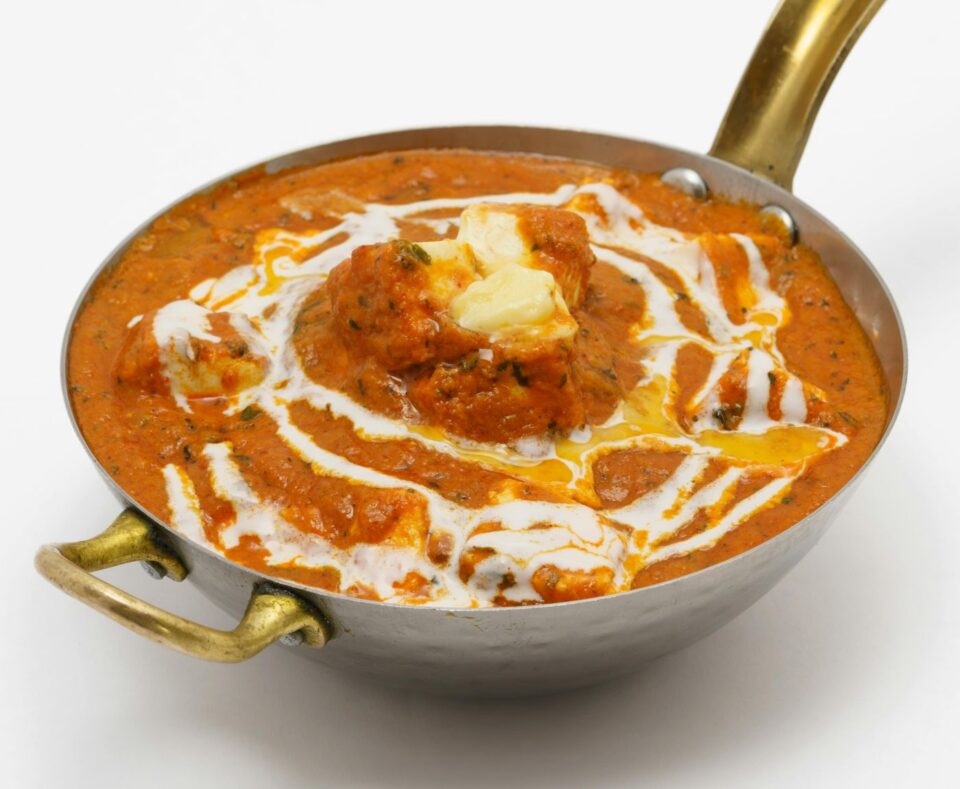
While the curry (or sauce) for butter chicken and chicken tikka masala can often look and taste the same, it shouldn’t! If you see them the same in a restaurant, chalk it up to a bad restaurant and a lazy cook.
Butter chicken leans heavily into a tomato-based curry. Some onions might be present (along with other spices and ingredients), but the star of the show for this curry is tomato.
This is followed by a visible presence of cream and butter in the curry, adding to its decadence, taste, and style. Overall, the curry is quite smooth with some tanginess thanks to the tomatoes, but also an underlying sweetness to balance the tanginess.
Chicken tikka masala leans less on tomatoes and decides to go heavier on onions instead. While the curry generally does include tomatoes, it makes more use of onions that are caramelized as in traditional Indian cooking. At this point, the curry should have notable notes of the onion flavor.
Theoretically, the curry for chicken tikka masala is still based on a tomato sauce, though the sauce now leans more into the onion flavors. Similarly, for butter chicken, the tomato sauce stays more true to its tomato origins, accepting the sweetness and tanginess.
The Origin Story – How These Dishes Came To Be
The origin story of these recipes is not expressive of their differences specifically. Yet, it can give us a better perspective of each recipe and how the dish came to be.
While the origins of these are hotly contested, it is generally accepted that Butter Chicken was the first to come to the scene. As the story goes, a trio of entrepreneurs were running a restaurant in Delhi, India somewhere around 1947-48. They experimented with their food and recipes a bit to offer something that went beyond the competition.
One specific objective was to keep seared chicken from drying out from the time of its preparation and to the time the patron finished eating their meal.
Eventually, this would result in the creation of the famed Butter Chicken. Buoyed by the success, these entrepreneurs started a restaurant called “Moti Mahal” (literal translation: pearl palace), which became famous in Delhi, eventually opening up several new locations and franchises.
Tikka masala has a similar story, but the location moves to the UK. Apparently, while butter chicken was all the rage in India, it didn’t quite hit the sweet spot in the UK. A chef at an Indian restaurant in Glasgow decided to experiment with the recipe, eventually coming up with the Chicken Tikka Masala.
The food was a huge hit in the UK, and is sometimes also referred to as its “national dish”. Interestingly enough, the restaurant that claims to be the origin of the tikka masala in the UK is named Shish Mahal (literal translation: mirror palace). Technically, shish can also mean skewers, but that translation doesn’t fit the language use, even if it looks fitting in a superficial setting.
Solving The Mystery Of Butter Chicken And Tikka Masala
At the start of this article, I mentioned how little difference many people actually notice between Butter Chicken and Chicken Tikka Masala. As we come to the end of this article, I think all that makes more sense now, given the information we have.
If we look closely, the key motivator for these recipes is to be more suitable for the palate of these patrons. So, even if they essentially use the same ingredients, some subtle differences show up to manage user expectations. And since these are regional variations of the same recipe, as the food gets popular in other regions, some variations to fit local tastes are only natural.
However, muddled as the line may be, we can still note some variations between these foods.
Two main points to note are: Chicken tikka masala must use boneless chicken, while butter chicken can have bones or be boneless. Additionally, the gravy/curry for butter chicken is more tomato-oriented, with a generous presence of butter. On the other hand, tikka masala gravy/curry has onions balancing the tomatoes in the curry, so it has a more pronounced onion flavor.